BARWIS - Elite training
INDUSTRY
Health and Performance
ROLE
UX Designer
team
10 Total
PRODUCT
Mobile App
Year
2024
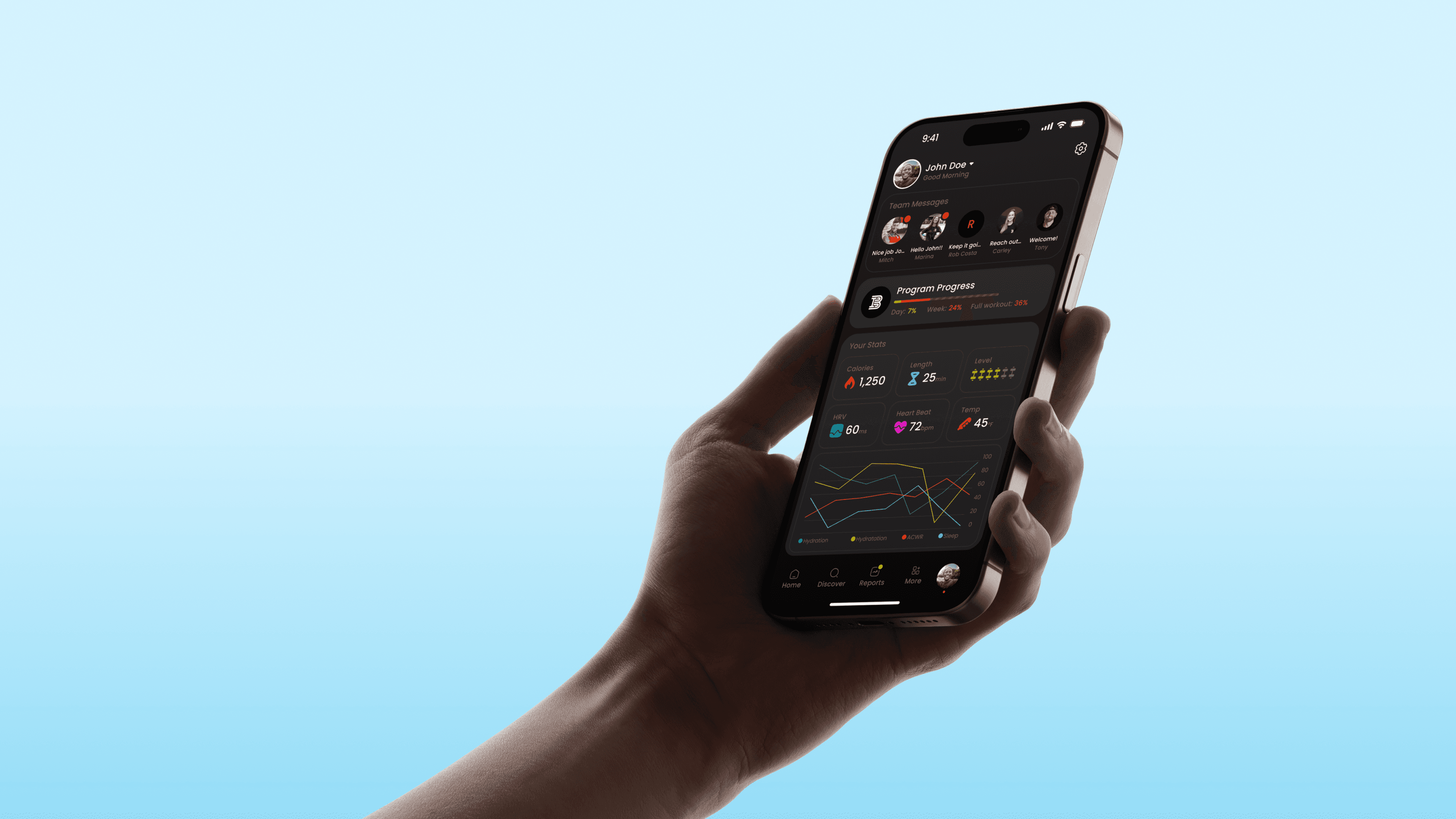
project overview
BARWIS is a high-performance training platform built for professional and elite athletes, founded by renowned physical therapist Mike Barwis. The platform serves as the central hub where athletes, coaches, nutritionists, and clinicians collaborate to manage training programs, recovery protocols, nutrition plans, and performance data.
When Metova engaged with BARWIS, the product had a significant problem. It had been designed and developed by an offshore agency that left behind an app that was visually poor, functionally limited, and built on an unstable codebase. Athletes and coaches were working around the tool rather than with it. The platform needed a complete rethinking, and before any new design could happen, someone needed to understand exactly what was broken and why.
That is where my work began.
the challenge
The app BARWIS had inherited covered a broad set of features: workouts, stories, fueling plans, file management, educational resources, and performance reports. On the surface, the feature set was ambitious. In practice, the execution fell short across the board.
Four core problems defined the experience. Athletes struggled to navigate the app in a way that felt natural or efficient. Schedules were hard to manage, communication was fragmented, and the overall flow felt disjointed at every step. The platform also lacked functionality that athletes and coaches expected as standard, including wearable device integration, dynamic training updates, and access to biometric data. Coaches and nutritionists had no reliable way to create and deliver personalized programs at scale. And perhaps most critically, there was no mechanism to track an athlete's progress over time. The platform offered no historical data and no visible sense of development or growth, which for a tool serving elite athletes was a fundamental gap.
MY ROLE & Scope
My involvement in this project had two distinct phases. The first was diagnostic: I led the UX audit that identified the core experience problems across the entire app and shaped the direction for the redesign. The second was executional: I owned the design of the Reports feature, the most data-intensive and strategically critical section of the platform.
Responsibilities included:
Flow exploration and documentation of the existing app experience, structured UX audit across all major features with wireframe suggestions paired to each finding, before-and-after comparisons presented to the client as part of the sales pitch, and high-fidelity design of the Reports feature through to development handoff.
APPROACH
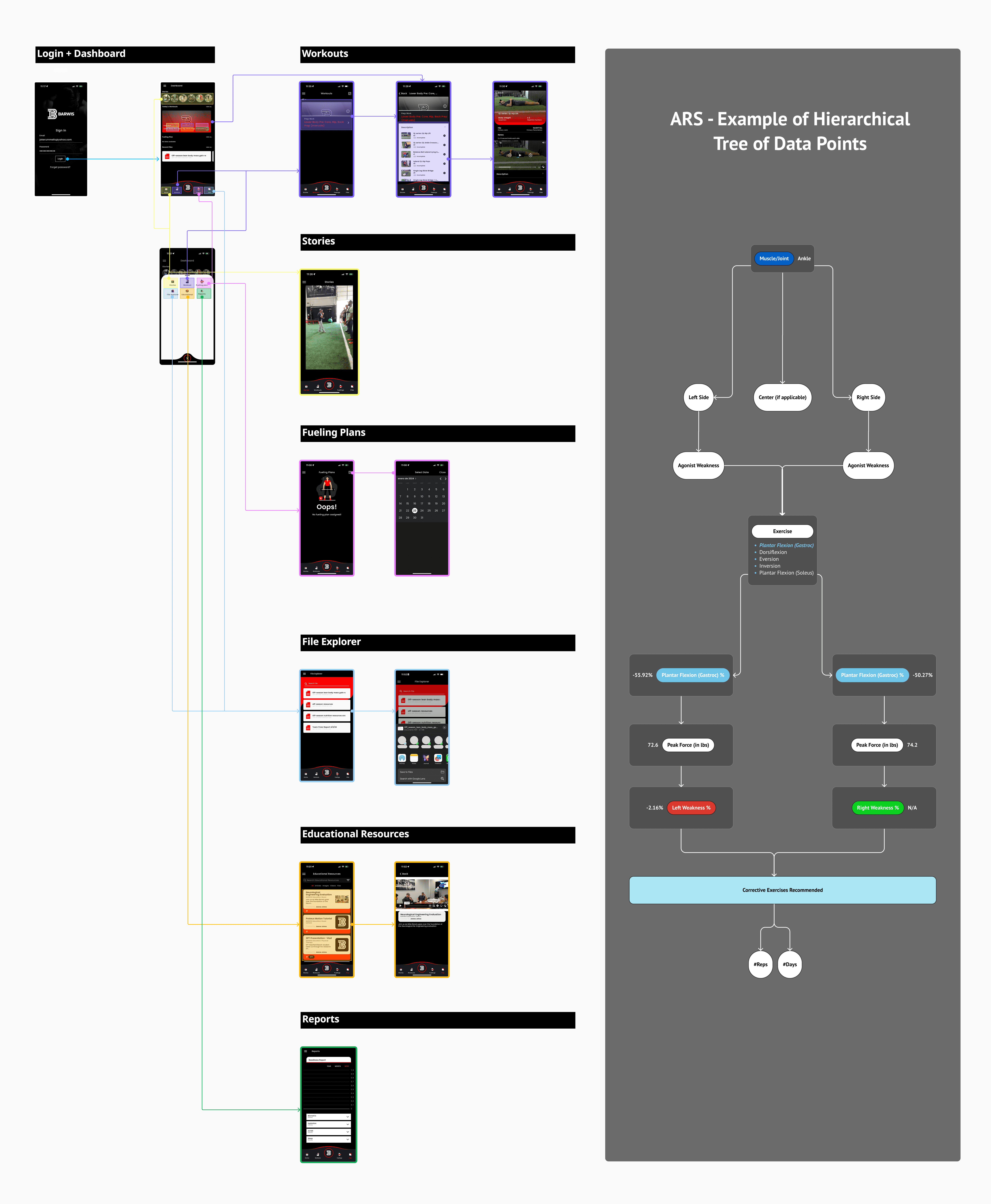
Before forming any opinions or proposing any solutions, I mapped the entire app using the live product. Every screen, every transition, every dead end across Login, Dashboard, Workouts, Stories, Fueling Plans, File Explorer, Educational Resources, and Reports. This was not a casual walkthrough. It was a deliberate effort to understand the mental model the app expected from its users and where that model broke down.
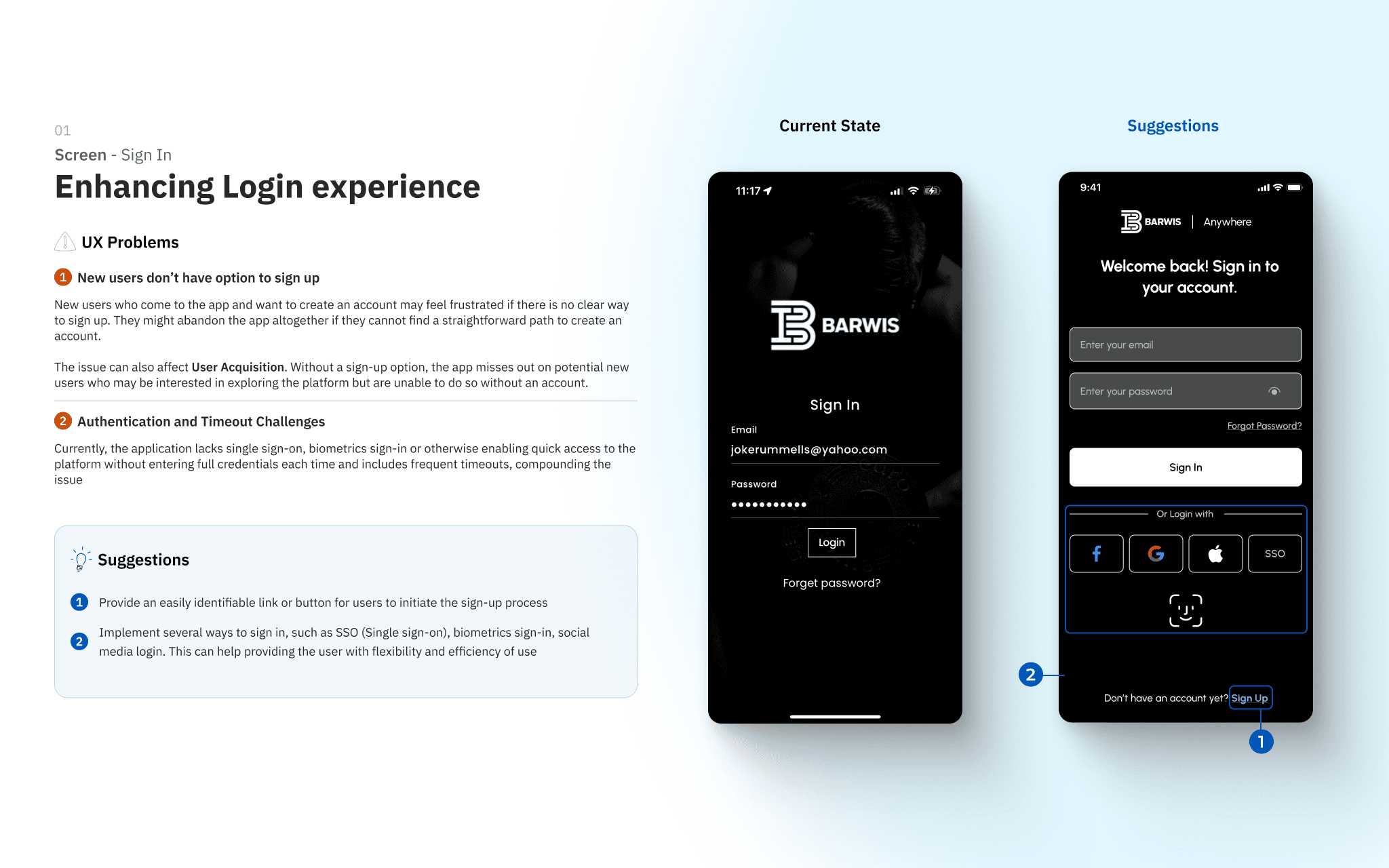
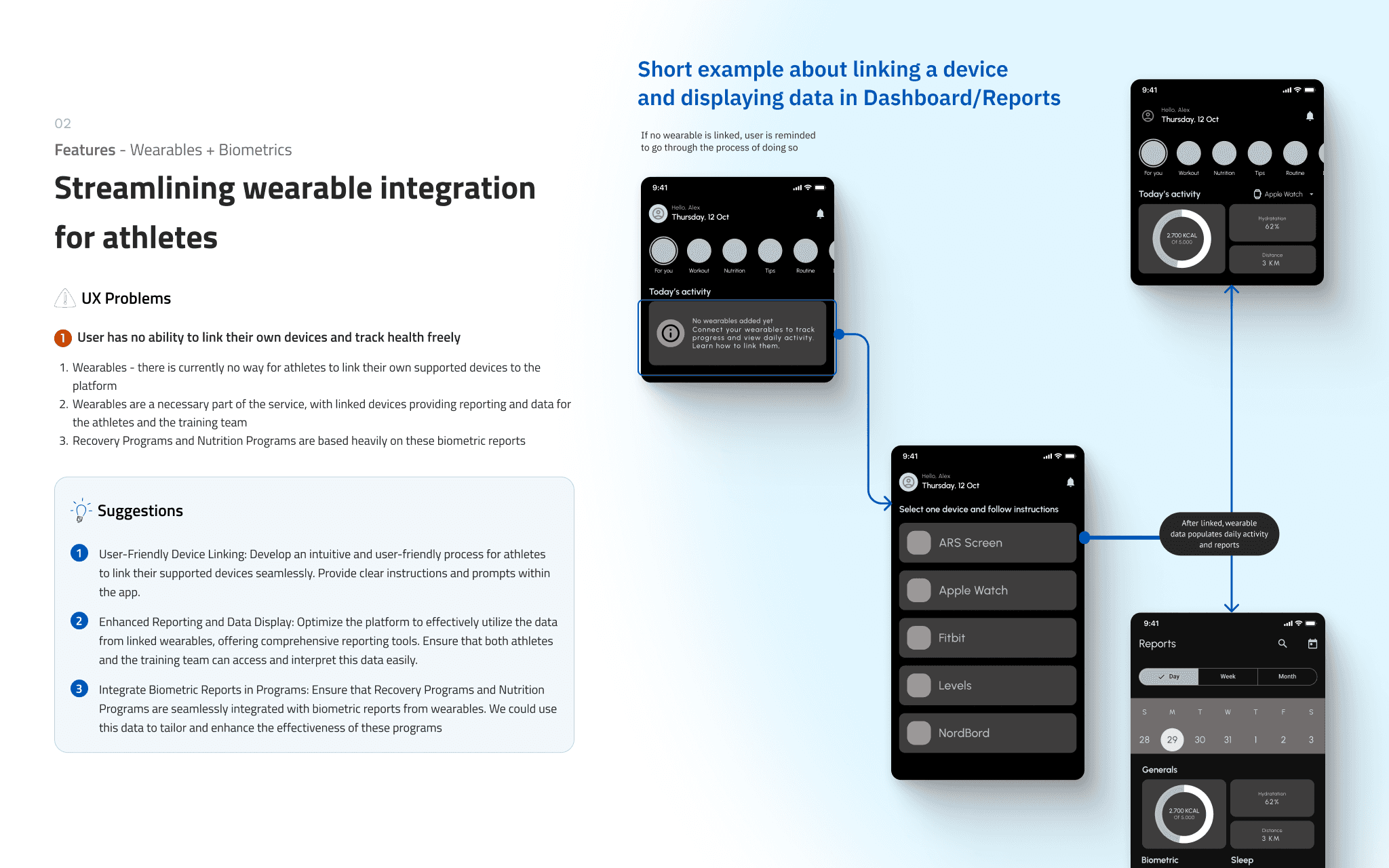
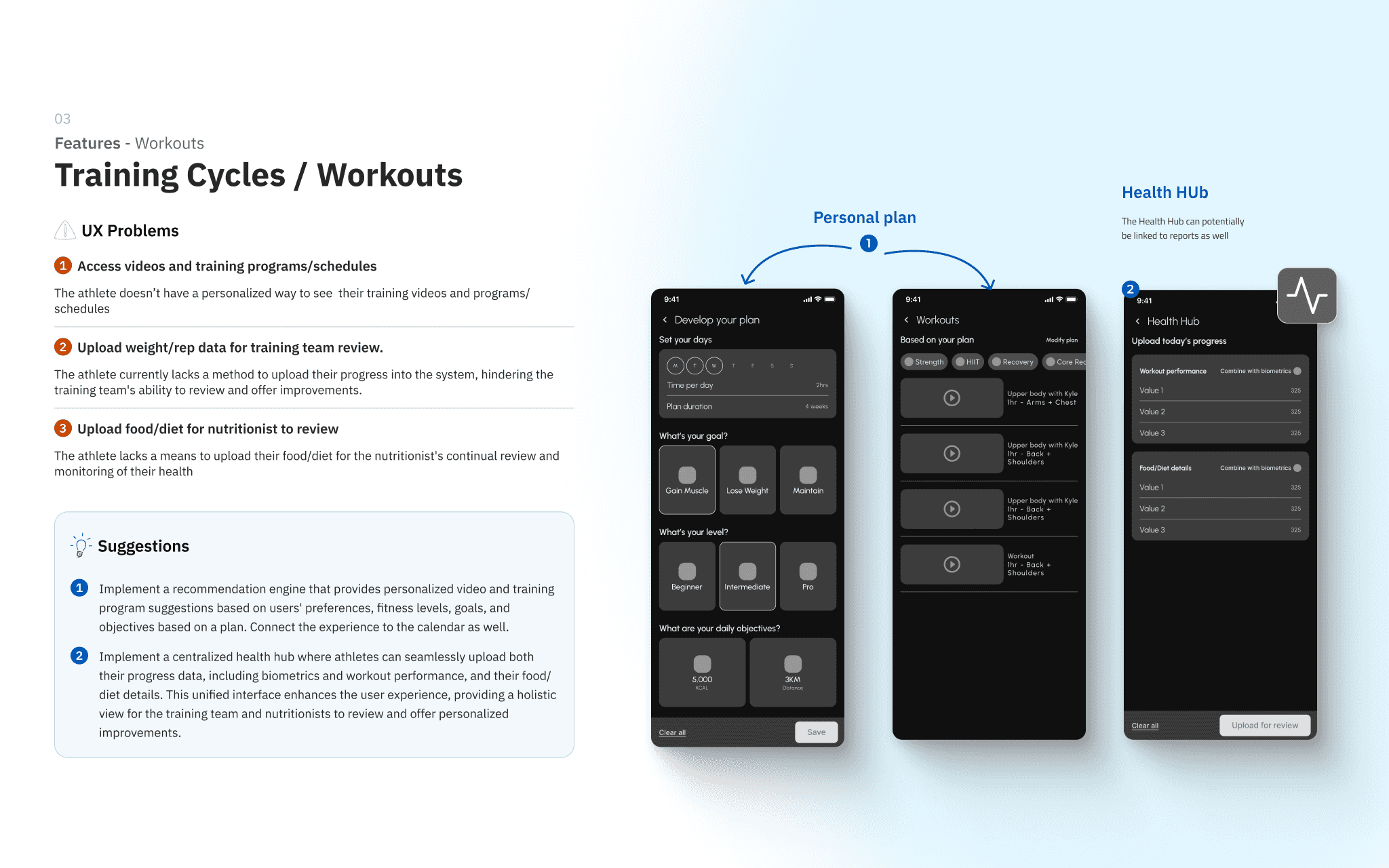
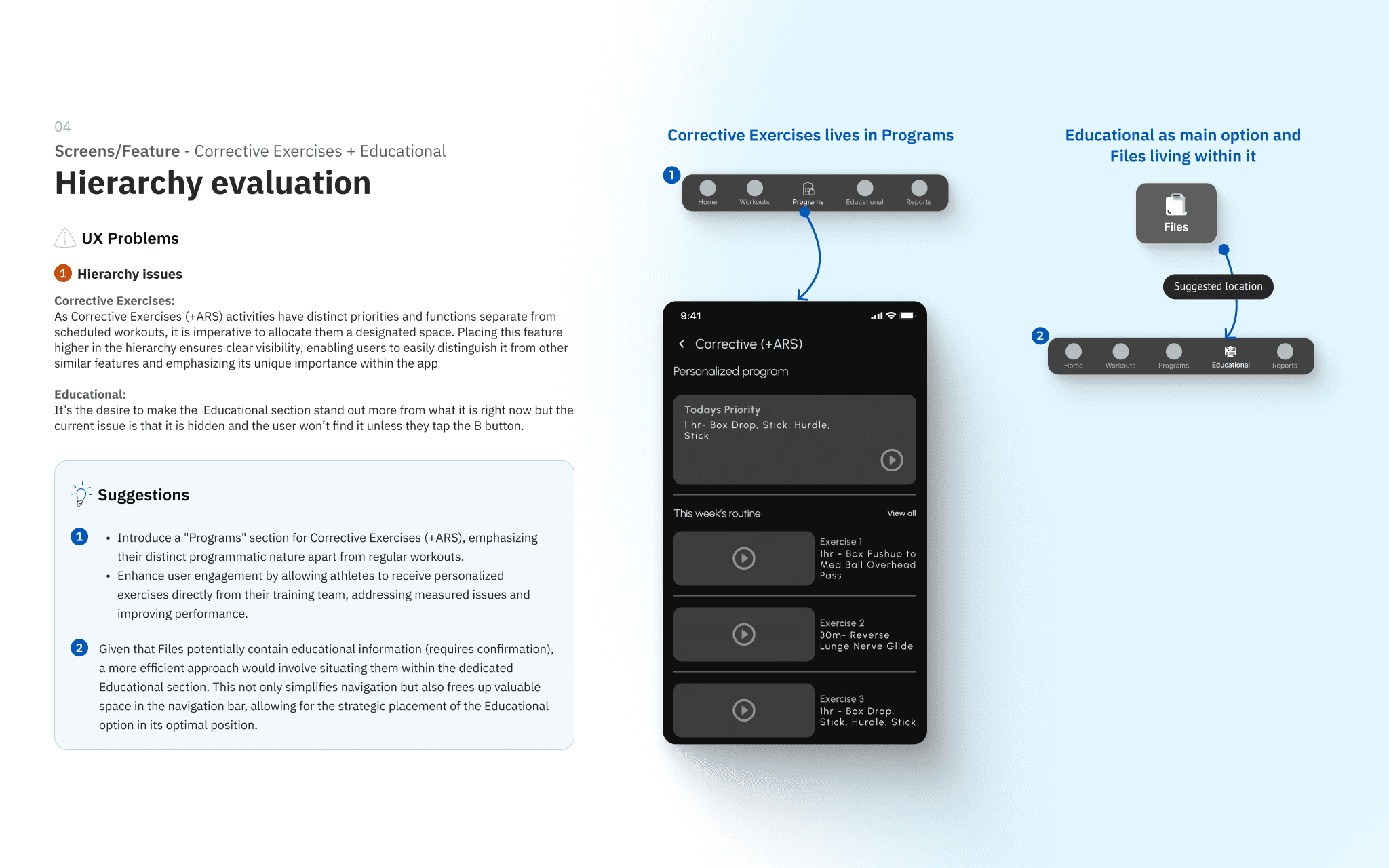
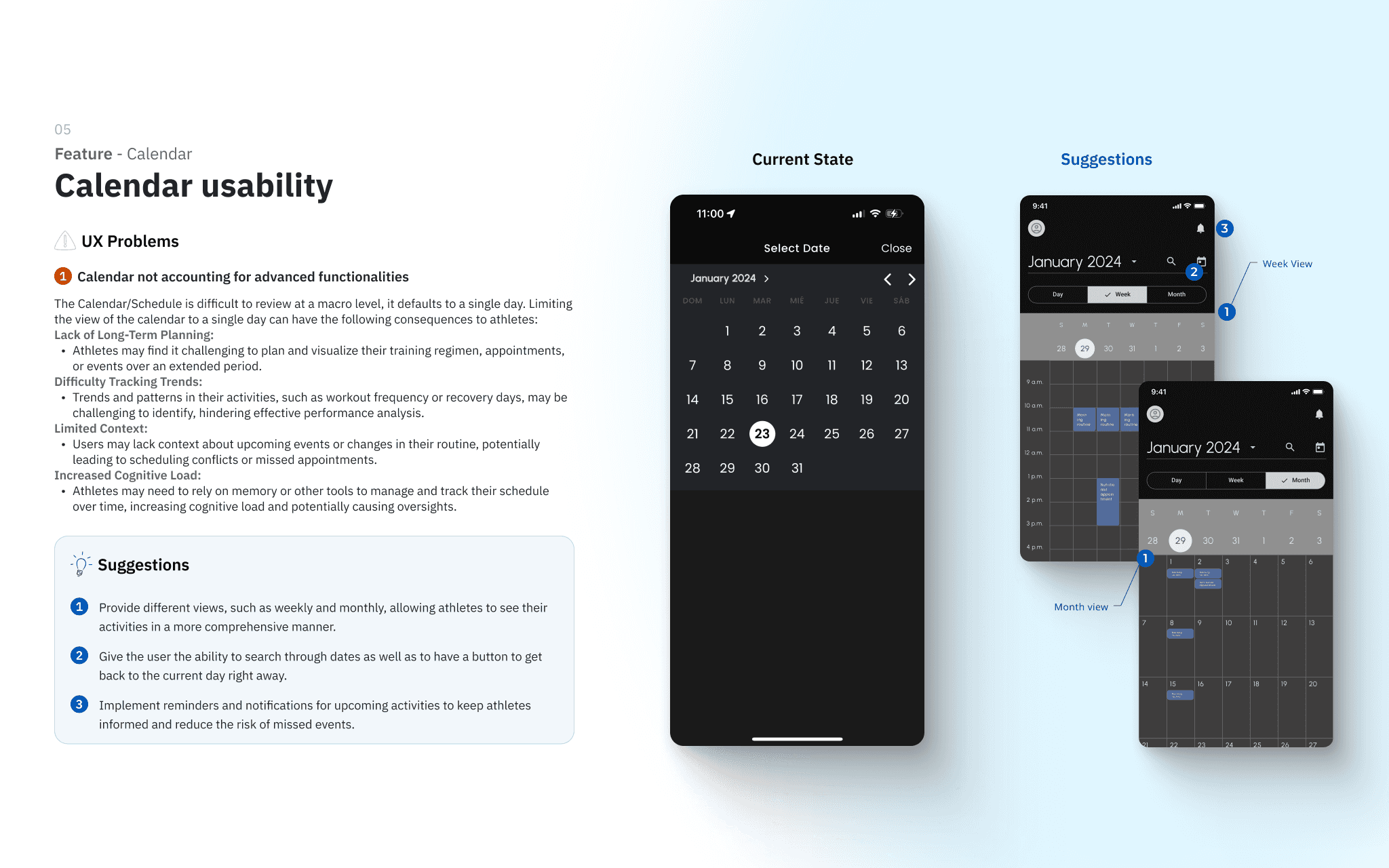
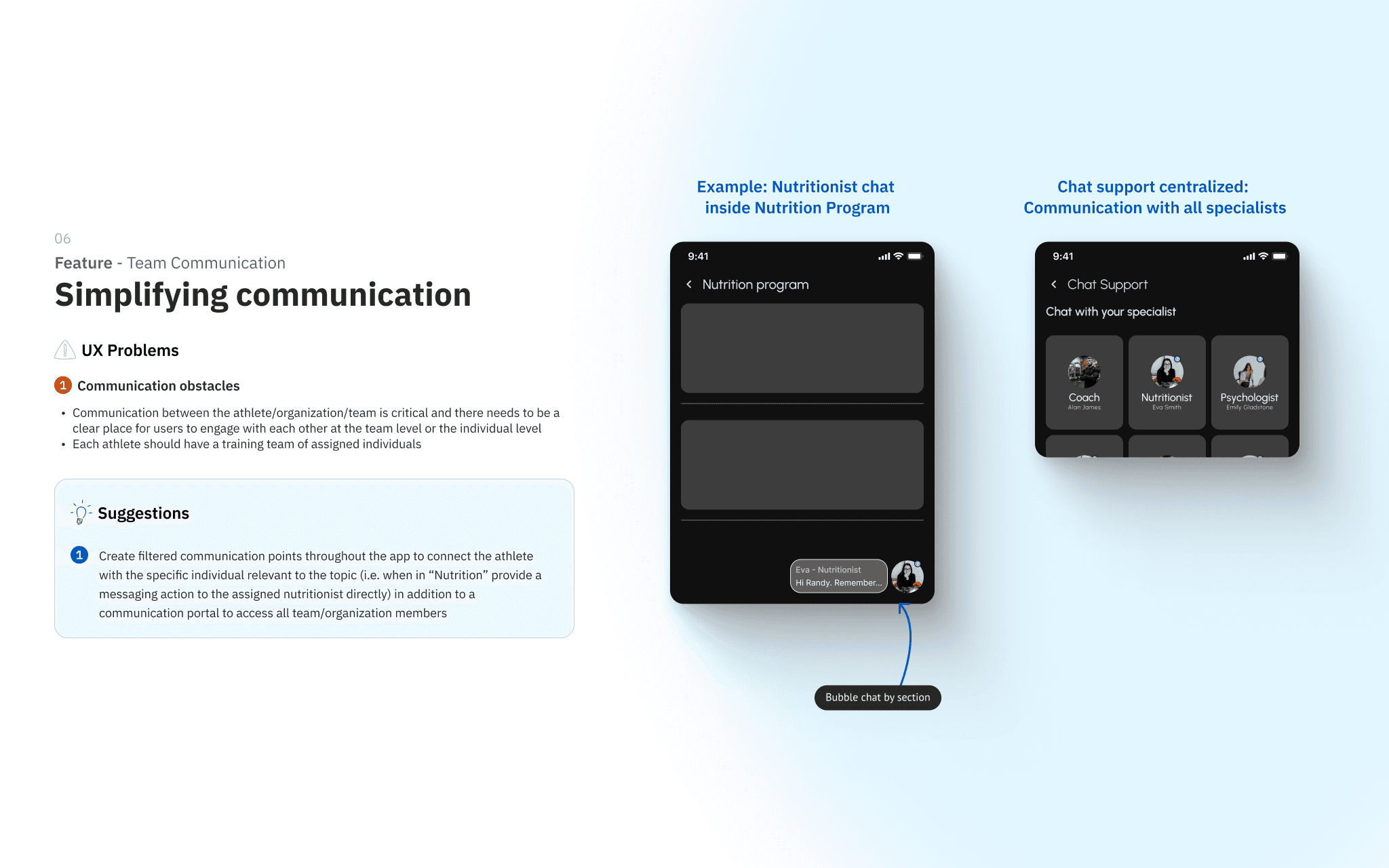
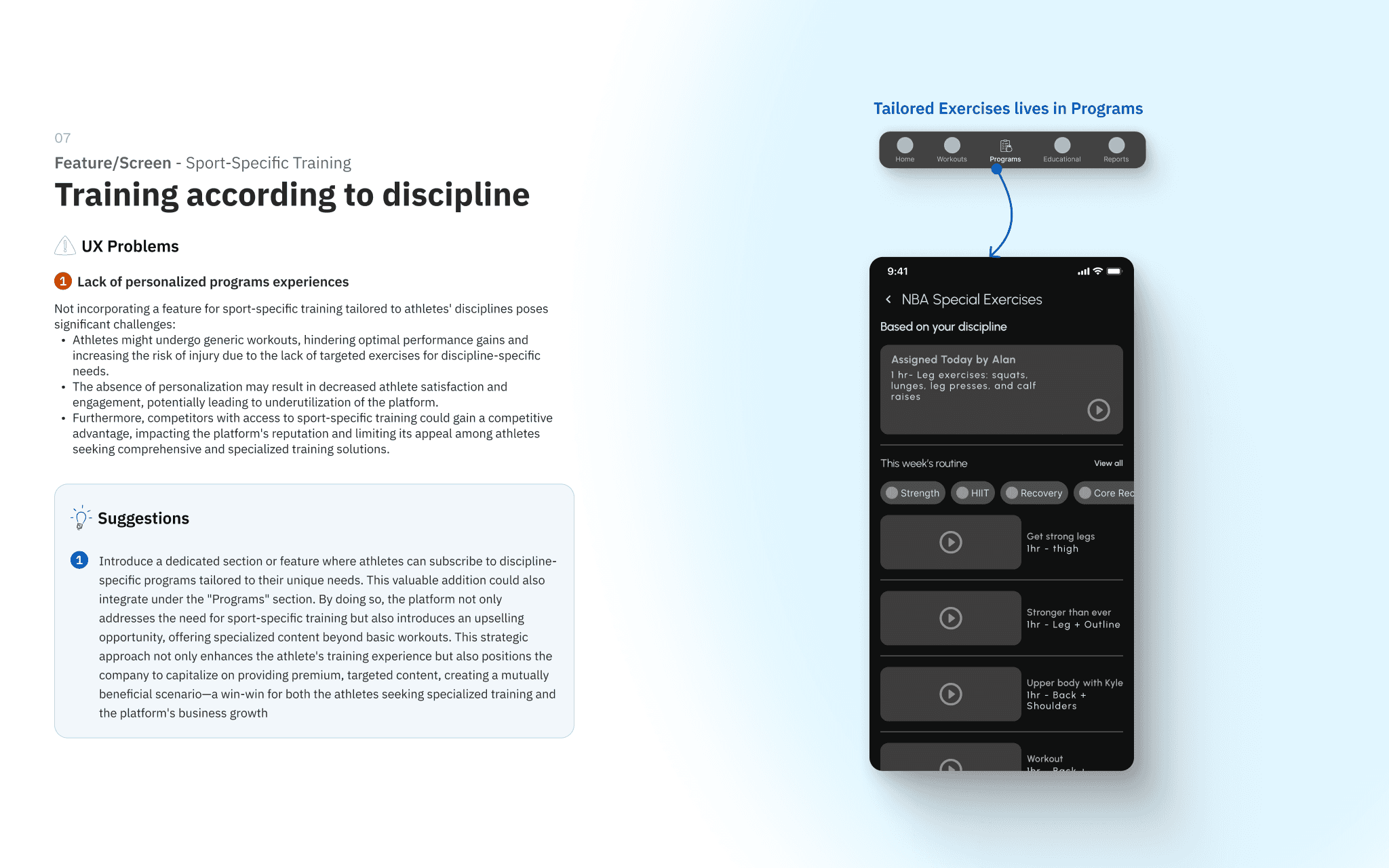
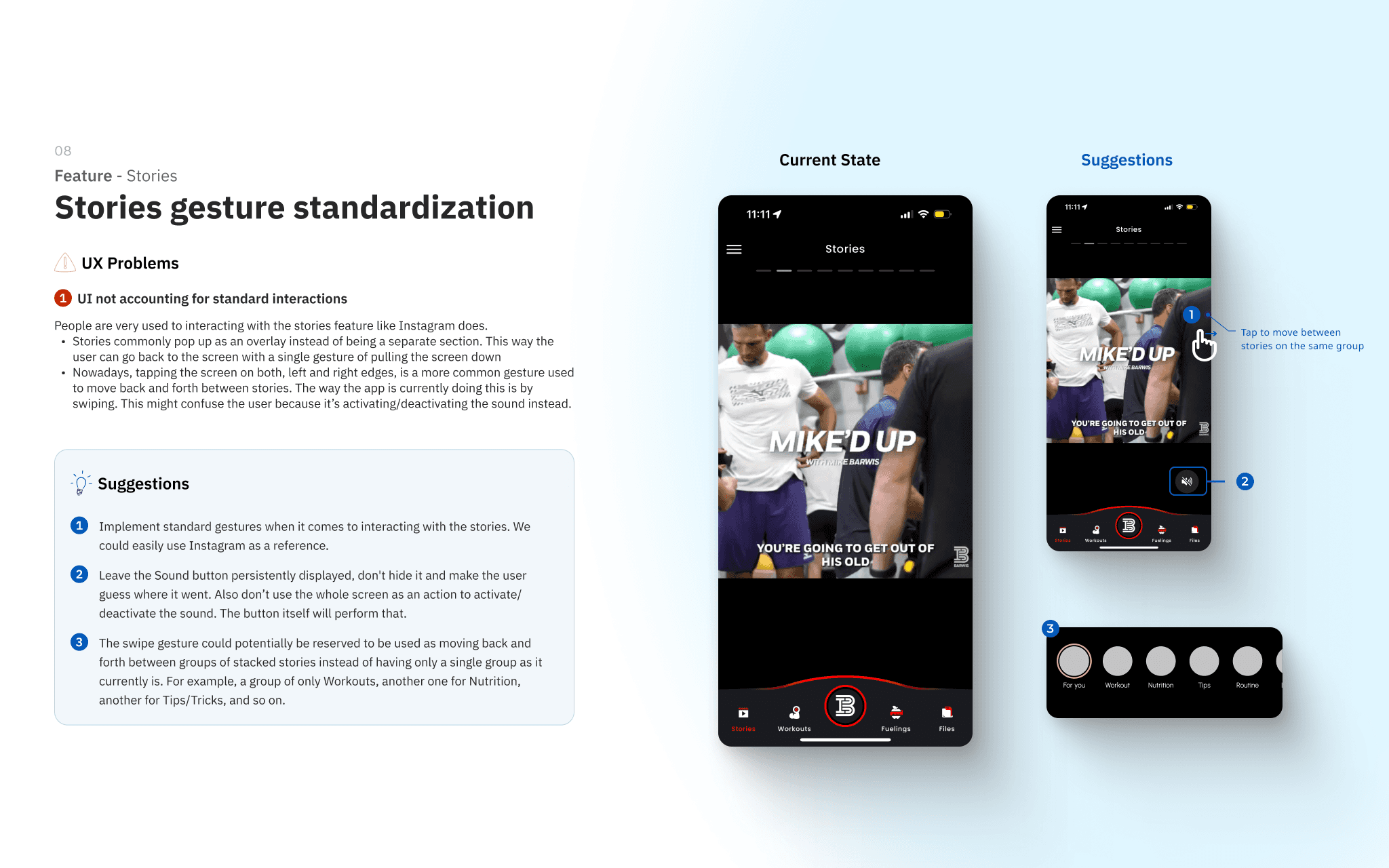
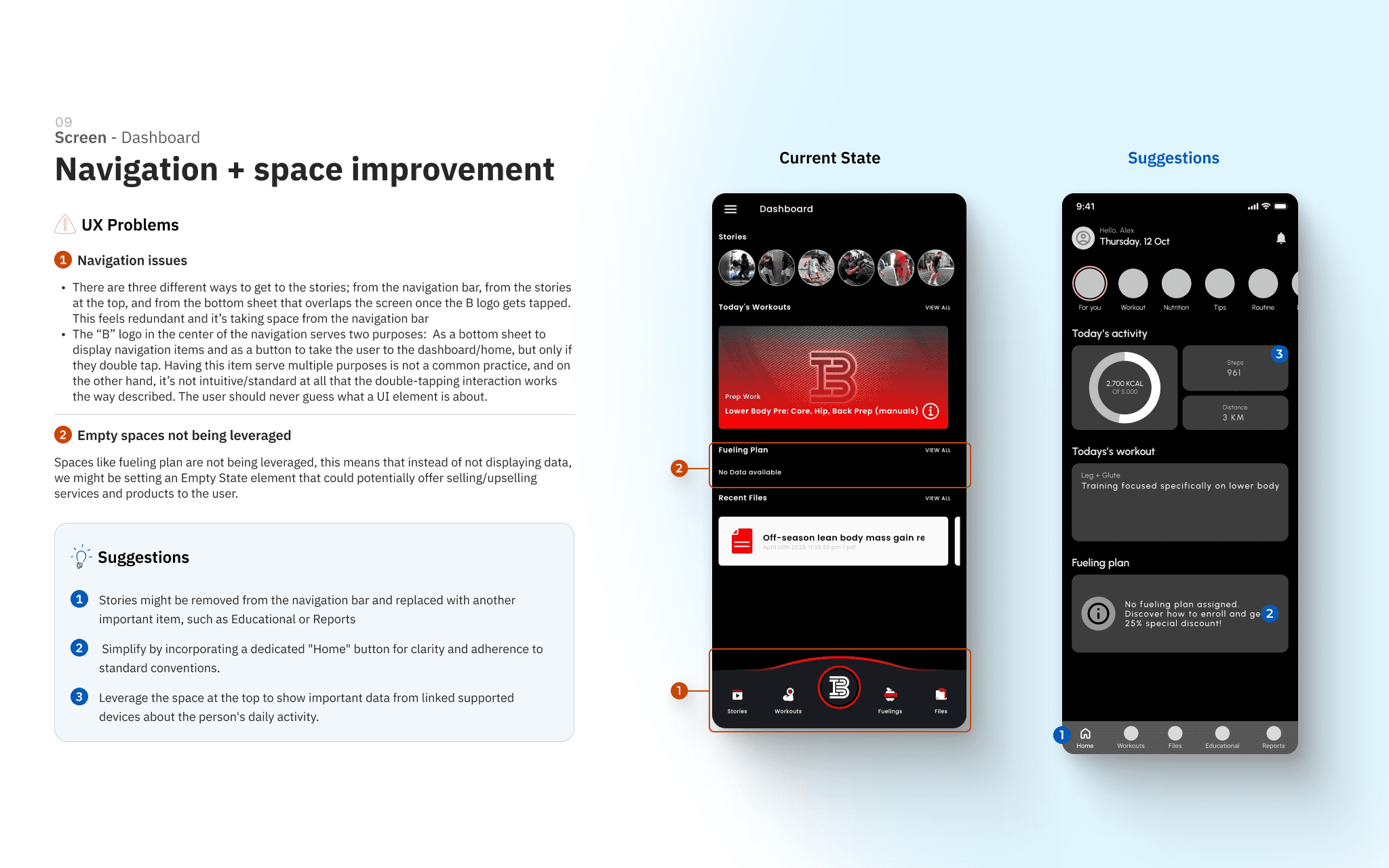
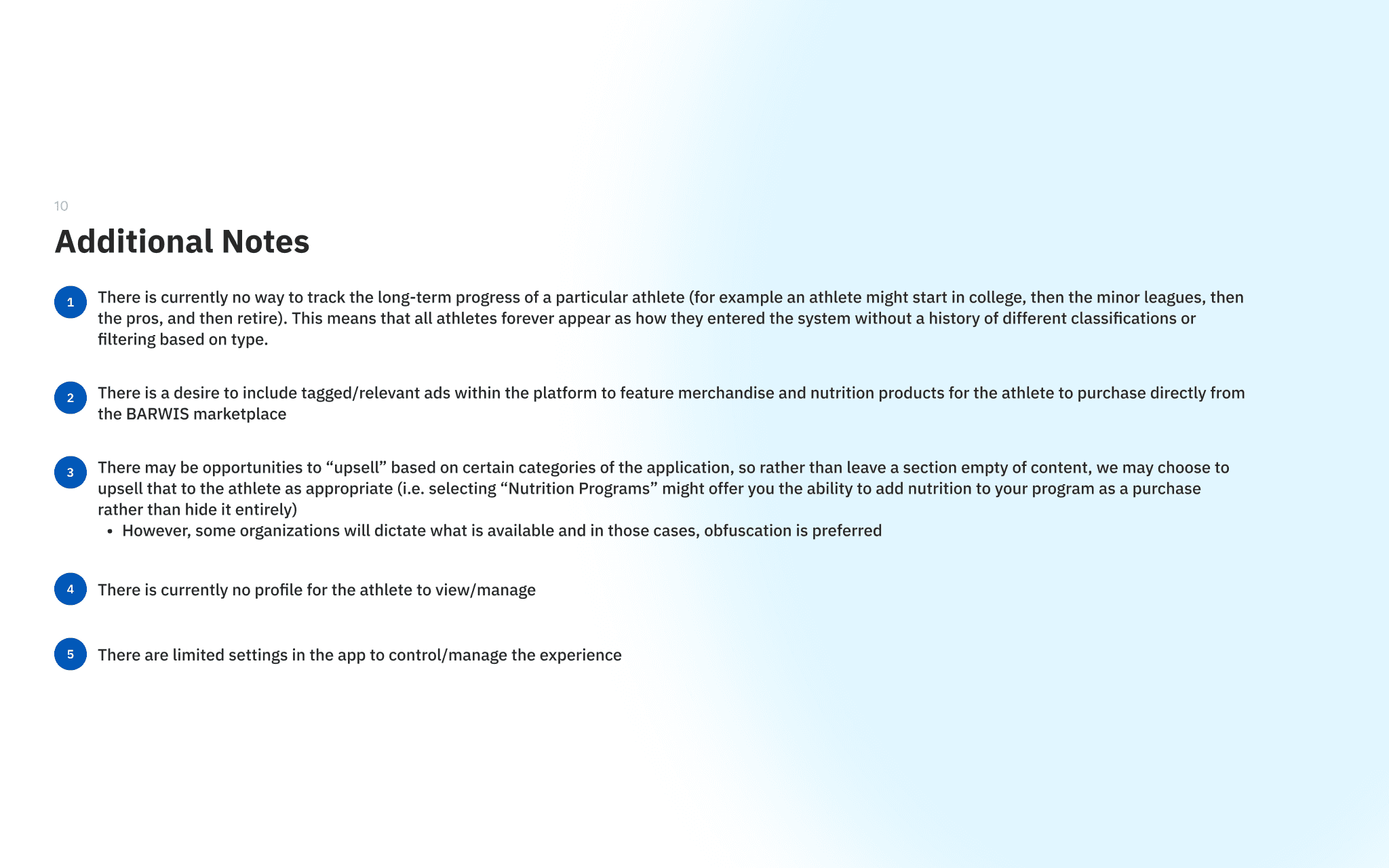
The flow exploration fed directly into a structured audit. For each feature area, I documented the specific UX problems, explained why they mattered in the context of elite athletic performance, and proposed targeted recommendations. But I did not stop at written findings. Each problem was paired with a wireframe suggestion showing what a better version of that screen or flow could look like, placed directly alongside the current state so the contrast was immediately clear.
This format made the audit both diagnostic and directional. It was not just a list of things that were broken. It was a demonstration of strategic thinking and a preview of what the redesign could be.
Some of the most critical findings included the complete absence of wearable device integration, which was fundamental given that biometric data drives everything BARWIS does. There were also key pieces of information scattered across the app without logical grouping, missing data fields that forced staff to work outside the platform, and navigation patterns that created friction at almost every step.
The audit was never intended to be a sales tool. It started as a design exercise to understand the product before proposing anything new. But when we presented the findings to Mike Barwis and his team, something shifted in the room. Seeing the problems named clearly, and a credible path forward laid out alongside them, gave the client the confidence they needed. The engagement with Metova followed shortly after.
THE SOLUTION: REPORTS
Once the engagement was confirmed, I took ownership of the Reports feature, which became one of the most complex and high-impact sections of the redesigned app.
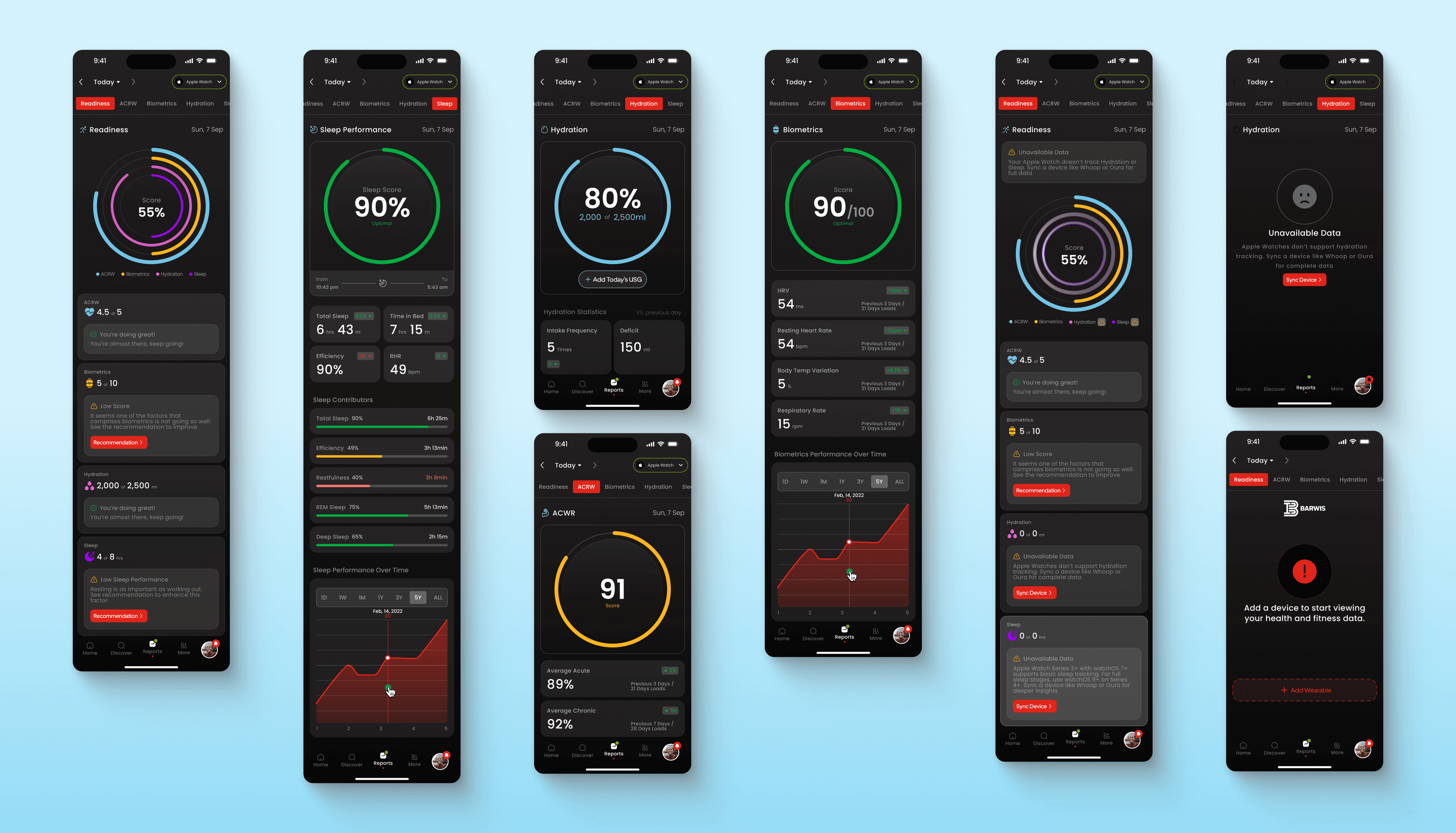
Reports is where all biometric and performance data surfaces for athletes and coaches. It needed to handle multiple data types clearly, account for scenarios where data was unavailable or unsupported by a connected device, and present complex metrics in a way that felt intuitive rather than clinical.
I designed five core report categories: Readiness, Sleep Performance, Hydration, Scores, and Biometrics. Each category had its own data hierarchy, visual language, and set of interaction states. I also designed the empty and error states, including the specific scenario where a data type is unavailable because the athlete's connected device does not support it.
The design had to balance two competing needs. Athletes needed to understand their data at a glance. Coaches and clinicians needed enough depth to make informed decisions. The solution was a layered structure where the top level showed a clear summary score or metric, and deeper interaction revealed the underlying data for those who needed it.
results
& impact
The audit reframed how the client saw their own product. Instead of defending what had been built, they were able to clearly see the gap between where they were and where they needed to be. That clarity is what made the business case for a full redesign possible, and it is what brought Metova into the project.
The Reports feature shipped as part of the redesigned platform. It gave athletes and coaches visibility into performance data that had never been accessible in a meaningful way before. Wearable device integration meant that data from Apple Watch, Oura, Whoop, Catapult, and Team Polar could now feed directly into the reports, making them live and relevant rather than static.
Conclusion
This project taught me something I carry into every engagement now: sometimes the most valuable thing a designer can do is stop and look honestly at what already exists before proposing anything new.
The audit was not glamorous work. It required patience, attention to detail, and the willingness to ask uncomfortable questions about a product the client had already invested in. But that work is what made everything else possible. It built trust, created alignment, and gave the team a shared understanding of what needed to change and why.
Designing the Reports feature was a different kind of challenge. I was working with data that elite athletes depend on to make decisions about their bodies and their careers. Getting the information hierarchy wrong was not just a UX failure, it was a disservice to the people using the product. That kind of responsibility sharpens your thinking in ways that ordinary projects do not.